The engine behind product-led growth.
The PLG Flywheel is the engine that powers growth by guiding users through different stages of product adoption. In this section, we'll break down the five stages and the key actions that help users move through the Flywheel.
Before diving into the specifics of the PLX framework, it's important to understand the foundation on which it's built: the Product-Led Growth (PLG) Flywheel. The Flywheel is a framework originally designed for B2B SaaS companies, helping them drive growth through their products rather than relying solely on sales and marketing. This strategy has propelled companies like Slack, Dropbox, and Zoom to unicorn status.
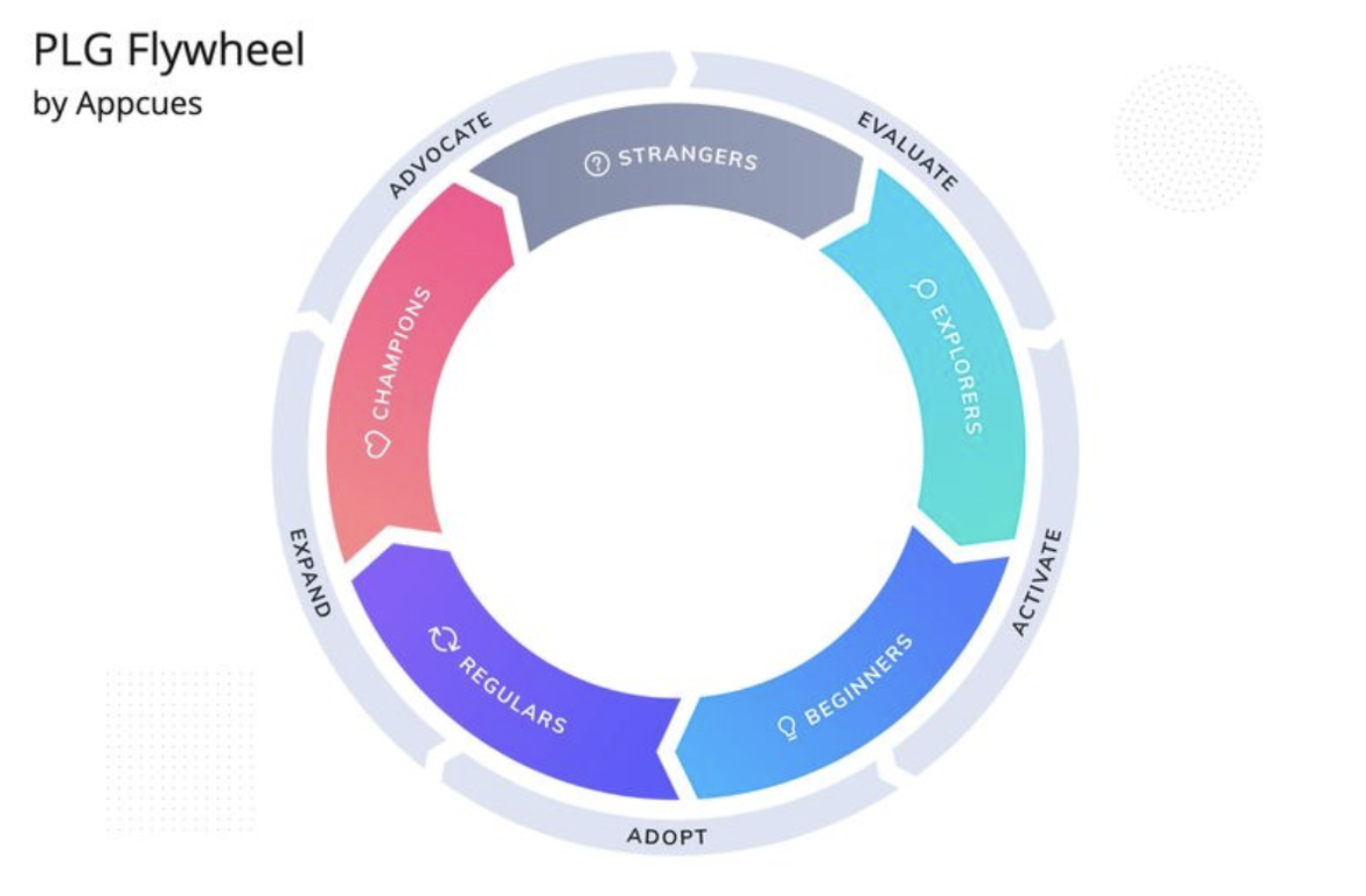
The Flywheel is named for its ability to maintain momentum with minimal external input. In business, this concept refers to the self-sustaining growth driven by a well-designed product that effectively converts users into loyal advocates.
The Flywheel framework identifies five distinct audience segments, each representing a pre-defined stage of product adoption:
For each segment, there is a key action that helps users progress to the next stage:
The PLG Flywheel sets the stage for PLX by outlining how to guide users through these stages, building momentum, and driving growth.