Turning insight into design decisions.
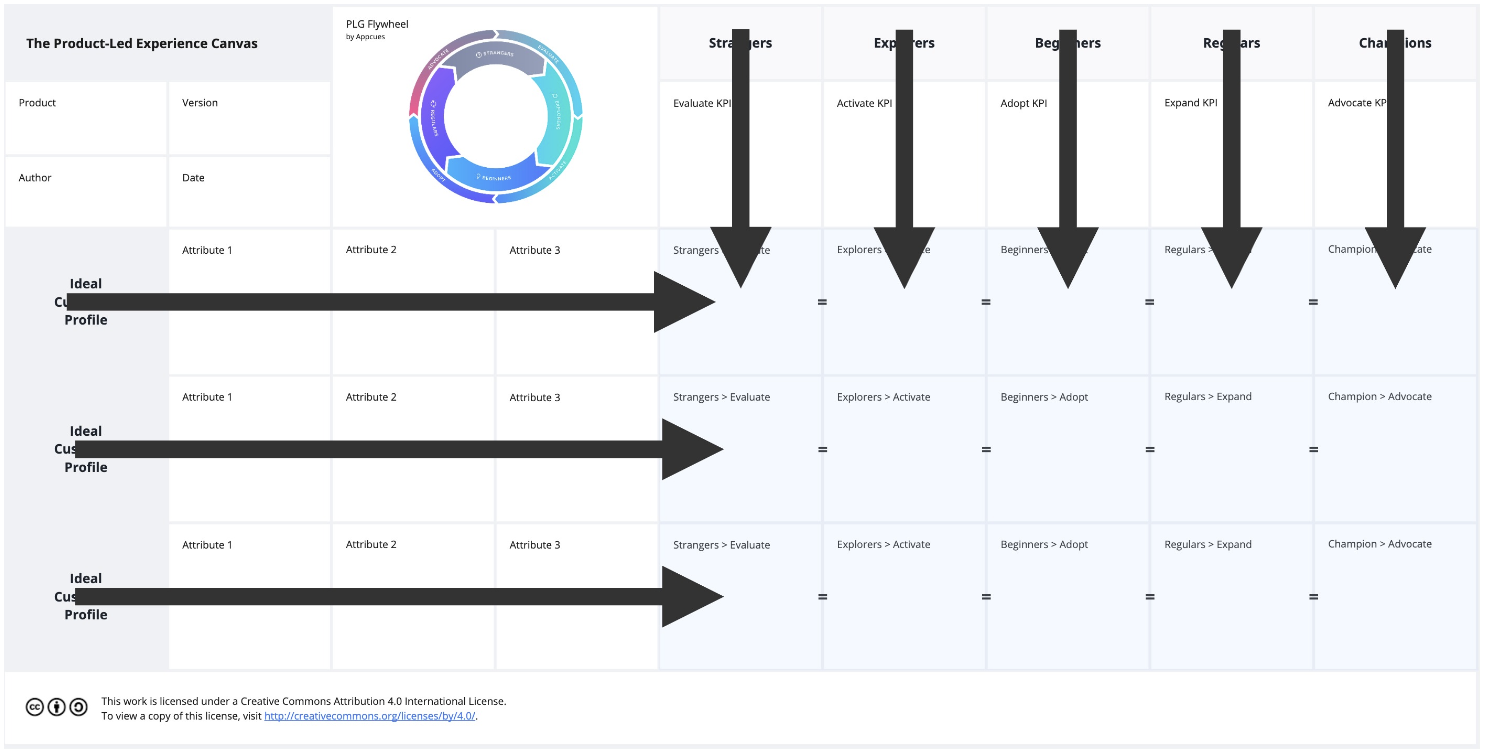
The final area of the Canvas is the Elements section (blue), where you translate insights into actionable design solutions. Using "How Might We" (HMW) statements, you reframe challenges as opportunities for innovation.
It can be helpful to remind your team that they're looking for opportunities, not quick fixes. Each word in the HMW phrase sets the right mindset:
"Might" reminds them that the idea may or may not work, and that's fine.
"We" emphasises collaboration, reinforcing that the process is about building on each other's ideas.
The canvas asks you to use the following HMW formula for at least five ideation exercises—one for each stage and audience cohort for every ICP you're working with:
In the actual PLX Canvas, I've used shorthand (e.g., "Strangers → Evaluate") to save space. But written out, it might look like this:
You get the idea. A problem well stated is a problem half solved, as the saying goes. Now, it's time to tackle the other half.
What does the customer need to think and feel to take the intended action and move through the adoption cycle? And what does your product need to do to make them think and feel that way? Consider these aspects:
— What does it need to look like? Design and imagery
— What does it need to say? Content and messaging
— How does it need to feel? Mood and tone
By answering these questions, you'll identify various requirements—functional, non-functional, and beyond—that your product must meet. It's your job to pinpoint these requirements and jot them down on post-it notes—one answer per post-it—and place them in the relevant cells on the canvas.
Let's say you're working on a two-sided marketplace platform that connects buyers and sellers of fresh produce. Here's your HMW:
In this context, Strangers are defined as all visitors accessing the seller's portion of your website for the first time. You've decided that a 70% Engagement Rate is your target for Activation. Essentially, any Stranger who hits that 70% threshold is considered Activated, which moves them into the Explorer cohort.
The real question is, HMW make that happen? Or rather, HMW ensure that our product makes that happen? Here are a few ideas:
— A 2-minute explainer video outlining the end-to-end sales process.
— Testimonials from other sellers providing social proof and validation.
— An option to set up a storefront for self-starters.
— An invitation to a free webinar for those needing more information.
Tip: Simply write down the answers on a post-it note—one answer per note—and place them inside the relevant cells.
The solutions you identify at this early stage are likely to be simple, and that's expected. Strangers will either activate or drop off within minutes, so there's only so much you can do in that short window.
However, experience shows that solutions become more complex as you move further into the adoption process. For instance, you might need a white-glove onboarding experience to help Explorers Activate, or dynamic pricing mechanisms to encourage Regulars to Expand.
It's about the ends justifying the means, and the stakes get higher the deeper you go into the adoption cycle. That's where we'll continue next.