Know exactly who you're designing for.
An ICP describes the perfect customer you want to target. Unlike user personas, which are based on fictional characters and focus on needs and behaviour, ICPs are grounded in internal data and align with business goals. Neither is better than the other, and I would argue you'll want to use both in the course of your design work, but the different starting points are important.
PLX is a product design framework with a single mission: driving growth. Achieving this requires a great user experience, which starts with defining our ideal customer profile.
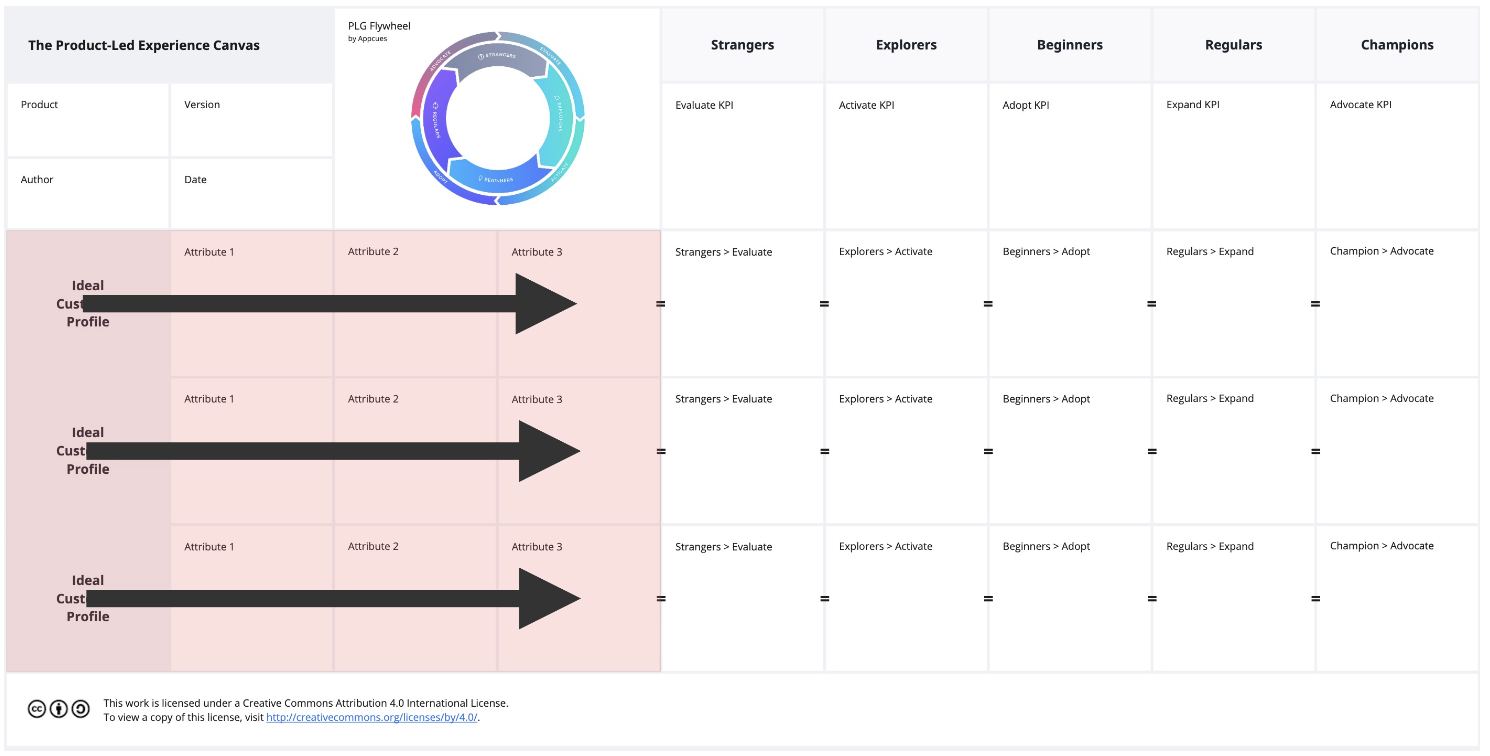
For PLX, a narrowly defined ICP is crucial. A more specific ICP leads to more focused product design, avoiding the pitfalls of trying to appeal to everyone and ending up with a generic solution. For example, if you're building a product to solve staffing issues in professional services firms, you might start by targeting HR leaders at mid-sized law firms in your area. While your Total Addressable Market could be much larger, focusing on a narrowly defined ICP gives you a beachhead to expand from.
→ SEE "HOW TO IDENTIFY YOUR IDEAL CUSTOMER PROFILE (ICP)" BY LENNY RACHITSKYOnce your ICPs are set, the next question is how you'll know they're moving through the Flywheel. That's where Metrics comes in — the subject of the next section.